Mora(da)
Mora(da) - Mora Dá Arte a Todos is a participatory art project in which four co-creation artist residencies are held in the towns of the municipality of Mora (Brotas, Cabeção, Pavia, and Mora), with the aim of highlighting the unique qualities of the region’s various places and people.
Drawing on the unique characteristics of these territories, four contemporary artists were invited to work with local communities, artists, and organizations, creating new spaces for sharing and creativity. The focus was on collective creation, with the goal of establishing a deep connection between artistic production and local identity.
The public exhibitions of the results were moments of communion and sharing, exploring new ways of accessing contemporary culture in the country’s inner regions.
After two years of work in Mora, we came to know its roads, places, and people. From the streets to the schools, from the squares to the gardens, a shared portrait of this place was created - a new cultural home.
November 2023 - November 2025
Mariana Dias Coutinho
Manuel Tainha
Filipa Almeida
Municipal Council of Mora
Mora School Group
Mora Senior University
De Mão em Mão
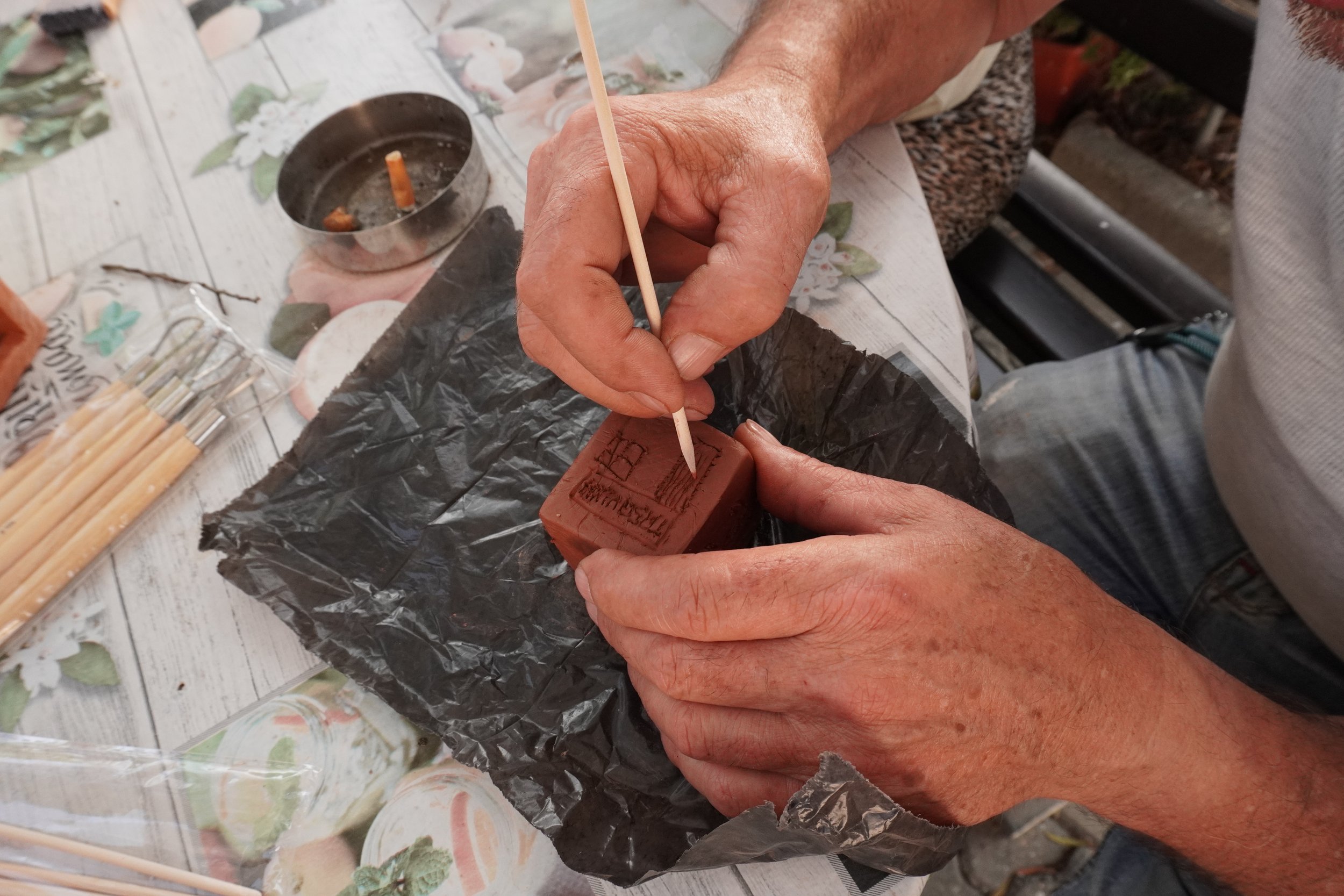
Over the course of nine months, artist Rui Horta Pereira got to know Pavia and its residents through various artistic endeavors.
With the participation of day centers Lar de Santa Isabel and Grupo do Andamento, the Santa Casa da Misericórdia de Pavia Choir, and the “As Cachopas” Choir, clay served as a blank canvas. This gave rise to cubic sculptures that carry drawings of the community’s inner worlds - the things they love and the places they hold in their memories.
The final exhibition, held at the town bandstand, brought generations together around a table where everyone was invited to play: connecting ideas, understanding the links between different fragments, building, exploring, or summoning stories. It served as a pretext to activate memory, foster dialogue, bring out laughter, and encourage people to speak up.
Sussurro da Água
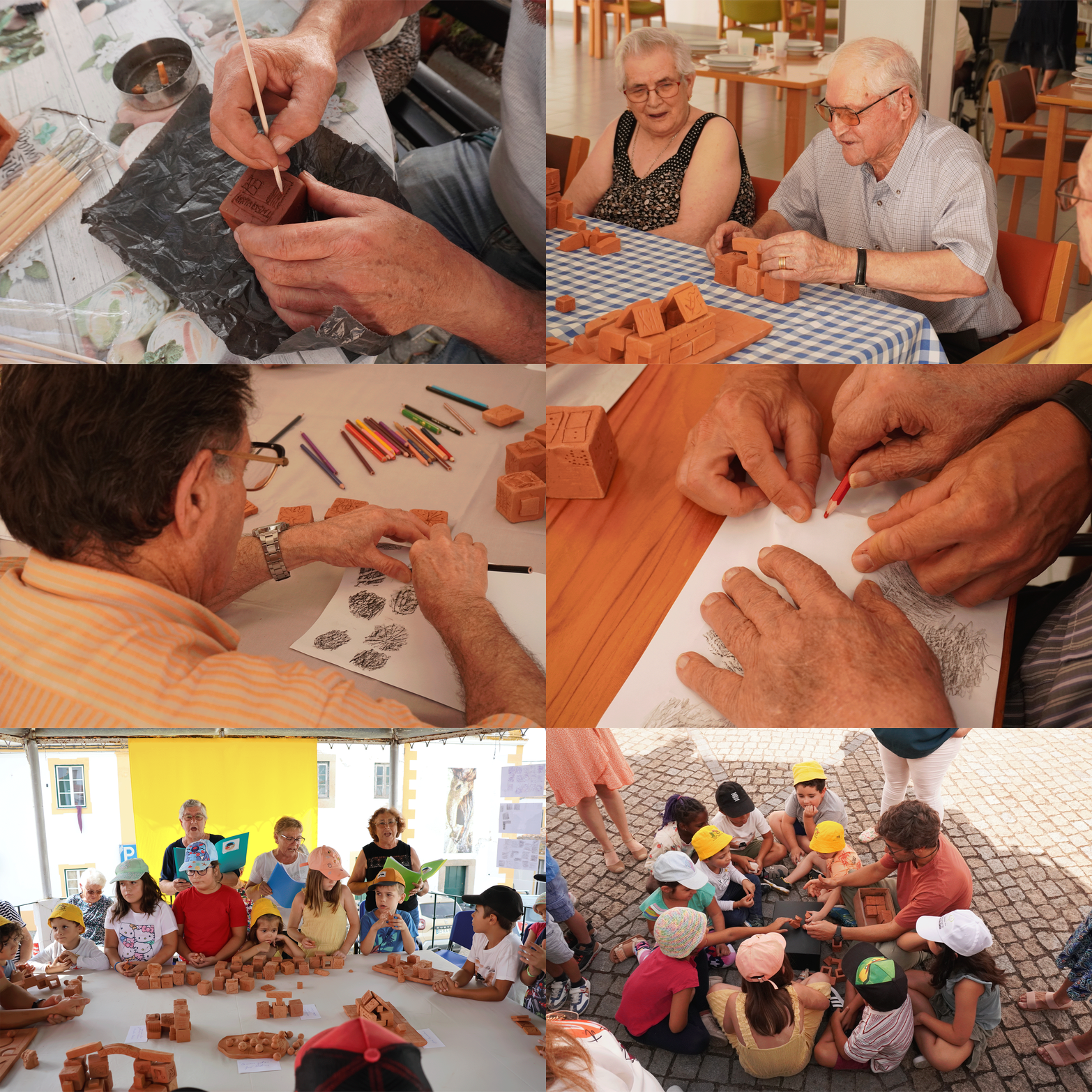
From informal gatherings in the village of Brotas - at day cares, in cafés, on the streets, and in places where people come together - the artist collected memories, poems, stories, and feelings tied to water and the land.
In workshops with the residents, they reflected on “What makes Brotas a place of affection?” Using natural pigments, each participant painted a symbol of their relationship with the land. The result was a circular painting on fabric, where words, drawings, and gestures intersect to form an affective map of the village. The legend of Nossa Senhora de Brotas paved the way for a spiritual imagination that, through the hands of the residents of the Lar da Associação de Reformados de Brotas, took shape in a small altar of clay sculptures. The artist’s encounter with the local potter, José Ramalhão, led to a sharing of practices and reflections on working with clay, from which three ceramic pieces emerged.
The project culminated in an exhibition at the village’s old laundry sink - a washhouse and gathering place - where the created pieces were displayed and local songs and poems were shared by the singing group Grupo de Cantares de Brotas and by the poet, Luís Lino. The works invited a collective listening, attentive to the shapes of memory.
Ponto Casa
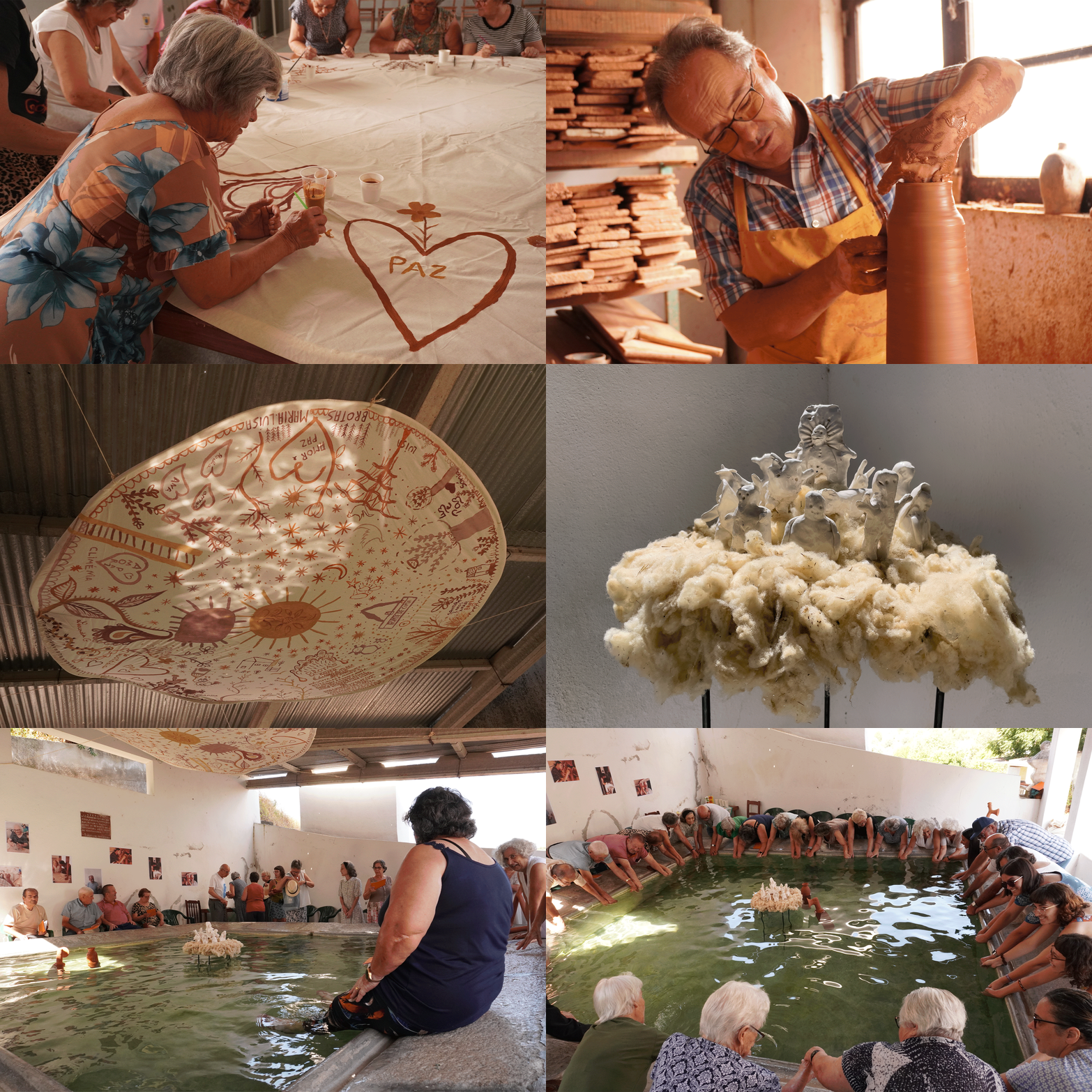
The artist conducted a residency based on a study of local traditions, artists, crafts, and materials, and developed a project in collaboration with the local community.
In the initial phase, open discussion sessions were organized at the Casa da Cultura for everyone to attend, focusing on the cultural needs of the area, the history of this space, and possibilities for the future.
Students from the theater group at the Mora Elementary and Secondary School were invited to participate in the project. Drawing from the photographic archive of António Gonçalves Pedro (1927–1999), a local photographer unknown to the young people, we looked at the places of our daily lives and traced the outlines of these images in charcoal on linen. The embroidery group from the Associação de Reformados Pensionistas e Idosos de Mora shared local embroidery, textiles, and songs that inspired the creative process and were presented in the final exhibition.
The Casa da Cultura, designed by architect Manuel Tainha, the artist’s grandfather, hosted the exhibition Ponto Casa, where he presented his original work in dialogue with the results of the process of engagement with the Mora community.
Cabeção no Coração
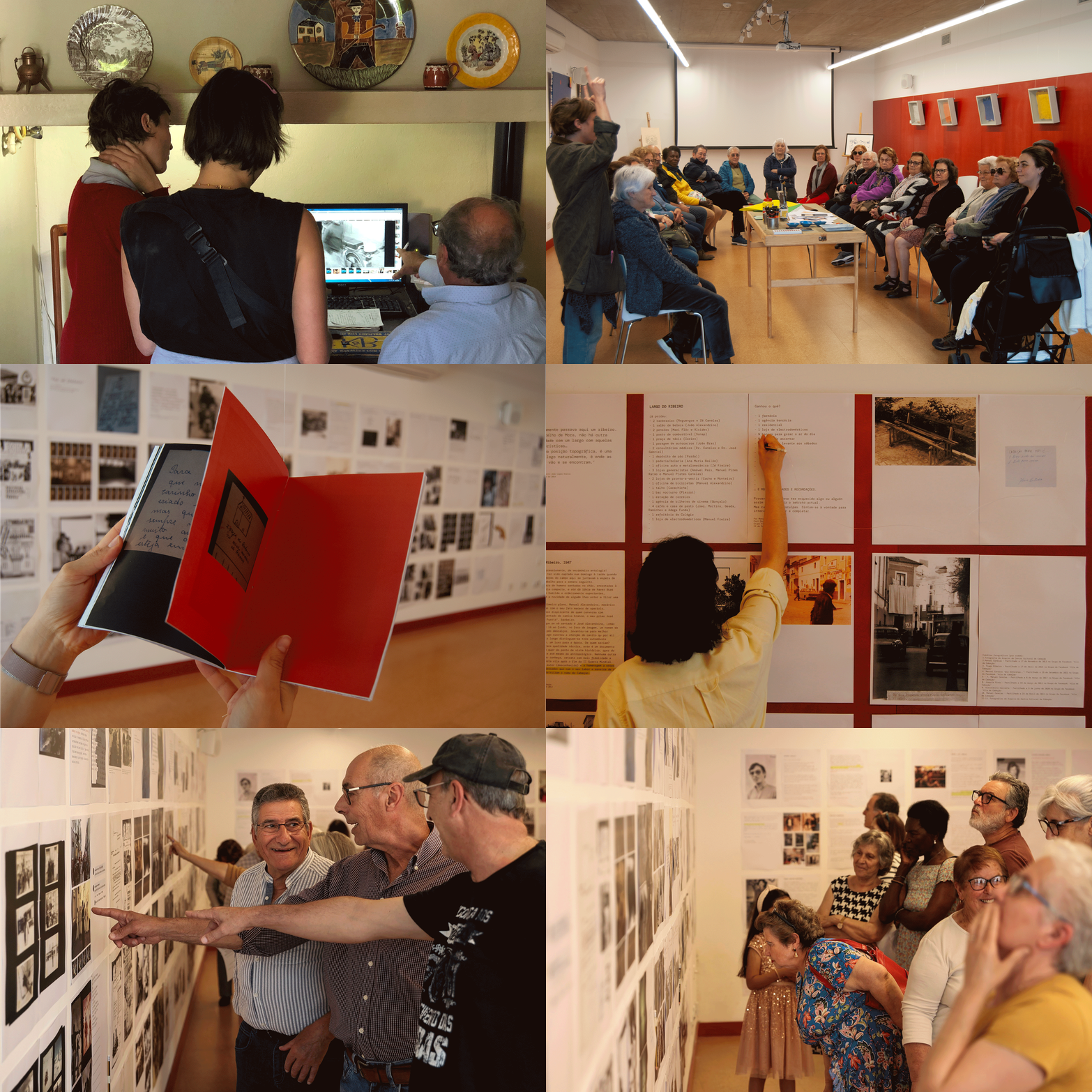
The artist began the project by conducting an emotional survey of the residents of Cabeção, using “Dream Boxes” containing questions about their hopes, dreams, and memories.
A series of workshops were developed with the Senior University, where the women of Cabeção shared their inner worlds by creating postcards using collage, painting, and drawing; writing messages to loved ones who are far away; and making sculptures out of modeling clay of personal objects.
These experiences with the local population led to the discovery of a photographic archive belonging to the Cabeção Cultural, Sports, and Recreational Center (CCDRC) that depicted local life in the 1970s and 1980s. These images served as a catalyst for connecting with the community, the places, and the people of Cabeção.
The residency culminated in the exhibition “Open Museum”, which opened in April 2024 at the Cabeção Cultural Center. The results of the workshops were presented, along with a fanzine about the process and an installation of cutouts illustrating the relationship with the community. The walls were filled with archival photographs and testimonies from the local population—pages of a book in progress, in which people were invited to interact and map the history of the village.